Commercial Surge Protection Requirements for Office Networks
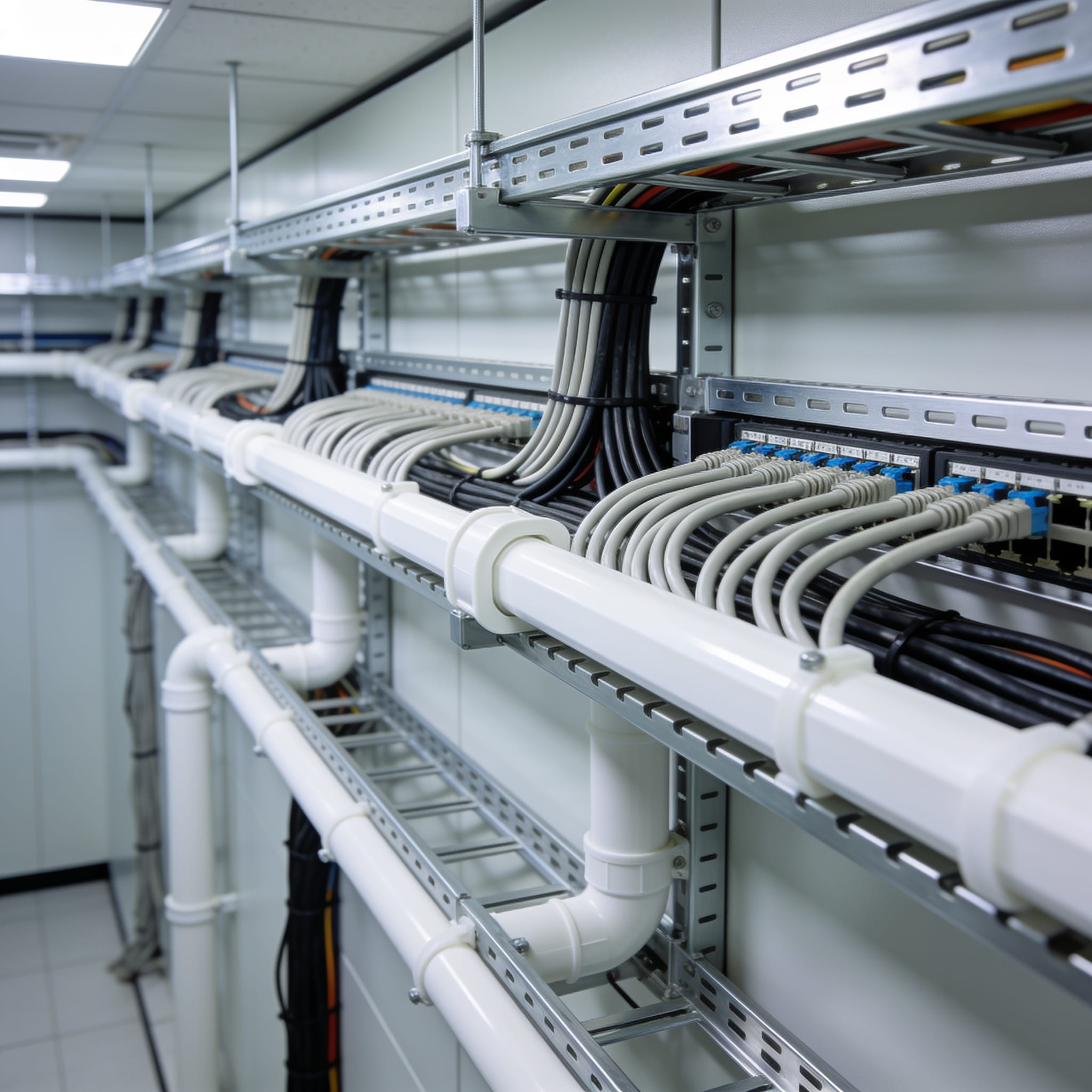
Every business relies on clean, dependable electricity to run its daily operations. From central server racks, network switches, and cloud-connected workstations to digital telephony and automated access control, modern commercial offices are packed with valuable electronic hardware. Yet many commercial premises remain unprotected against one of the most common causes of unexplained hardware failure: transient electrical surges.
While a catastrophic lightning strike is the dramatic scenario people often picture, the majority of damaging power surges originate quietly from inside the building or from everyday utility switching on the national grid. For IT infrastructure managers, facilities leads, and corporate directors, protecting digital networks against these voltage spikes is essential for maintaining business continuity and preserving equipment health.
Under current UK wiring standards (BS 7671 18th Edition Amendment 2), the installation of Surge Protection Devices (SPDs) is no longer a minor advisory consideration. It is a clear regulatory requirement for commercial properties where voltage disturbances could cause financial loss or operational disruption.
This guide breaks down what commercial power surges are, explains the legal requirements under BS 7671, outlines the three primary types of SPDs, and provides practical advice on safeguarding your office systems.
What is a Transient Overvoltage and Why Does it Matter?
A transient overvoltage, commonly referred to as a power surge, is a brief, intense spike in electrical voltage that lasts for mere microseconds. While a standard UK commercial single-phase supply delivers a stable nominal voltage of 230V (and 400V across three phases), a transient spike can push line voltage to several thousand volts in an instant.
Power surges generally fall into two categories:
External Surges (Atmospheric and Utility Events)
External transients are triggered outside the building. The most severe examples come from direct or indirect lightning strikes on overhead power lines or surrounding ground. More commonly, external surges stem from routine switching events carried out by utility companies on the regional grid network or from sudden load changes when large neighbouring industrial units switch heavy machinery on and off.
Internal Surges (Everyday Office Switching)
Surprising to many building managers, up to 80 percent of transient overvoltages occur inside the commercial building itself. Every time high-draw inductive equipment switches on or off (such as large air conditioning chillers, lift motors, heavy refrigeration compressors, or ventilation fan arrays), the collapsing magnetic field sends a reverse voltage spike back into the building's sub-distribution circuits.
How Surges Damage Sensitive Office Networks
Modern microprocessors and network hardware operate at extremely low internal voltages, often between 1.8V and 5V. When a high-energy voltage spike passes through standard office wiring, it affects equipment in two distinct ways:
- Immediate Catastrophic Failure: A large surge instantly burns through delicate circuit boards, fries server power supplies, and destroys sensitive network interface cards, taking IT infrastructure offline in an instant.
- Gradual Degradation (Electronic Wear): Smaller, recurring micro-surges chip away at semiconductor components over time without tripping circuit breakers. This gradual damage leads to mysterious computer reboots, corrupted server databases, intermittent network drops, and equipment that fails years ahead of its expected operating lifespan.
BS 7671 18th Edition Requirements for Commercial SPDs
The 18th Edition of the IET Wiring Regulations (BS 7671, specifically Section 443 and Section 534) sets out clear rules regarding when surge protection must be provided.
Under Amendment 2 of BS 7671, protection against transient overvoltages must be installed where the consequences of an overvoltage could:
- Cause serious injury to, or loss of, human life.
- Cause significant financial or economic loss.
- Cause disruption to commercial, industrial, or public sector activity.
- Disrupt critical public services or communal infrastructure.
In virtually every modern commercial office, an unexpected shutdown of server equipment or local network communications causes immediate financial loss and operational disruption. Because of this, installing compliant surge protection on commercial distribution boards is standard practice for satisfying current UK wiring rules.
Beyond statutory compliance, commercial property insurers increasingly look for verified surge protection during annual risk assessments. Having certified SPDs in place demonstrates corporate due diligence, helping ensure your property insurance policies remain fully valid.
The Three Types of Surge Protection Devices Explained
Effective commercial protection requires a layered approach known as coordinated surge suppression. Different sizes of SPDs handle different energy levels at different points in your electrical distribution network.
Type 1 SPDs: Origin and Mains Intake Protection
Type 1 devices are heavy-duty arresters installed at the main electrical incoming supply board (origin of the installation). They are engineered to handle the massive electrical energy associated with direct or nearby lightning strikes and major utility switching events.
If your commercial premises features an external lightning protection system (such as roof-mounted conductor tapes and air terminals) or is fed directly by overhead electrical lines, a Type 1 SPD is mandatory at the main intake panel.
Type 2 SPDs: Sub-Distribution and Floor Panels
Type 2 SPDs are the primary workhorses of commercial office surge defence. They are installed inside sub-distribution boards, riser panels, and local lighting and power panels across each floor.
Type 2 devices clamp lingering incoming transients that bypass the main intake board, while also absorbing the frequent internal switching surges generated by office HVAC chillers and lift motors. They reduce line voltage to safe levels that office branch circuits can tolerate.
In many commercial office applications, combined Type 1+2 SPDs are fitted into main panels to provide both high-energy lightning protection and precise voltage clamping within a single enclosure.
Type 3 SPDs: Point-of-Use and Server Rack Protection
Type 3 SPDs provide the final layer of defence. These devices have a low energy capacity but react rapidly to clamp any tiny residual voltage ripples directly at sensitive equipment.
They are typically integrated into dedicated server rack power distribution units (PDUs), uninterruptible power supply (UPS) systems, and specialised socket outlets serving high-value IT hardware, lab instruments, or audio-visual suites.
Type 3 devices must always be supported by upstream Type 2 protection; installed alone, a large incoming surge would simply overwhelm them.
Best Practices for Installing and Maintaining Commercial SPDs
To provide genuine protection, surge suppression hardware must be specified and installed with technical precision. Even high-grade equipment can fail to protect your network if basic wiring rules are overlooked.
Keeping Connection Leads Short
When a surge occurs, the rate of current change is extremely high. The physical wire connecting the SPD to the distribution board busbars carries its own natural inductance, which creates a voltage drop along the cable.
Under BS 7671 guidelines, the total connecting lead length (from the phase conductor, through the SPD, and to the earth bar) should ideally not exceed 0.5 metres, and must never exceed 1.0 metre. Keeping these leads as short, straight, and direct as possible ensures the SPD clamps the voltage spike before it can pass down circuit conductors to your server room.
Clear Coordination and System Earthing
An SPD works by redirecting excess voltage safely into the building's earthing network. For the system to function effectively, the installation must have low-resistance earth paths and proper equipotential bonding. Our commercial engineers test loop impedance and verify earthing integrity before and after integration to ensure the surge path clears safely.
Ongoing Inspection and Status Verification
Most commercial SPDs feature visual status indicator windows (often changing from green to red when internal components absorb their maximum surge capacity and need replacement) or include dry-contact alarm terminals wired into the building management system.
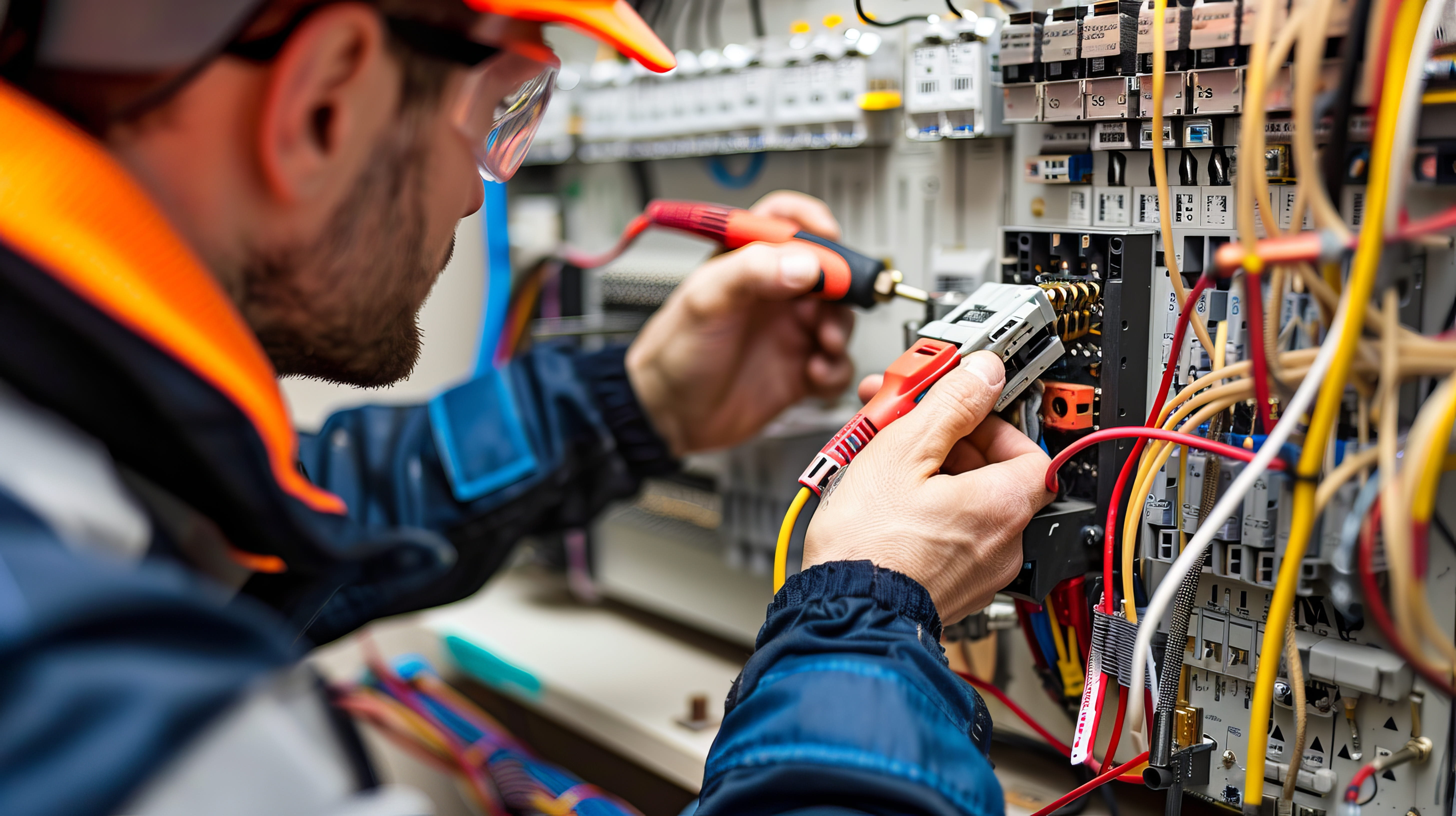
During scheduled electrical inspections, our certified technicians check these visual status flags, verify cartridge health, and ensure your protective hardware remains fully operational.
Planned Installation with Minimal Workplace Disruption
We recognise that corporate offices, IT departments, and financial teams cannot afford unexpected power cuts. Adding SPDs to existing distribution panels requires brief, planned circuit isolations.
Our project managers work closely with your facilities and IT leads to coordinate installation work carefully. We schedule primary switchboard connections during pre-agreed maintenance periods or lower-occupancy windows, ensuring your critical servers can be managed safely and your trading routines remain protected throughout.
Safeguard Your Office IT Infrastructure Today
Do not wait for a sudden power transient to corrupt critical databases, damage expensive server hardware, or interrupt your working day. A professionally engineered surge protection setup from Big Green Electrical provides reliable, certified defence for your commercial premises.
Contact our friendly commercial team today to discuss your building requirements and schedule a technical site survey. Learn how we execute surge protection installations and keep your business infrastructure safe, compliant, and fully operational.