CASE STUDY

Consumer Units and Distribution Boards: Examples from 2026

Examples of residential consumer units and distribution boards, explaining individual circuit protection, surge protection, available space and planning for future expansion.

Residential case study · 2026

Protection, practicality and room to grow

Homeowners often approach us because their fuse box lacks modern circuit protection, several circuits lose power together when a fault occurs, or there is no room for additions such as EV charging or solar. Others have received recommendations following an Electrical Installation Condition Report (EICR), or want to address an upgrade they have been putting off.

These examples from 2026 show how Big Green Electrical approaches those challenges: selecting a board that suits the property, providing individual RCBO protection, incorporating surge protection where appropriate, clearly identifying circuits and allowing space for future additions.

Example one

Two-row FuseBox consumer unit

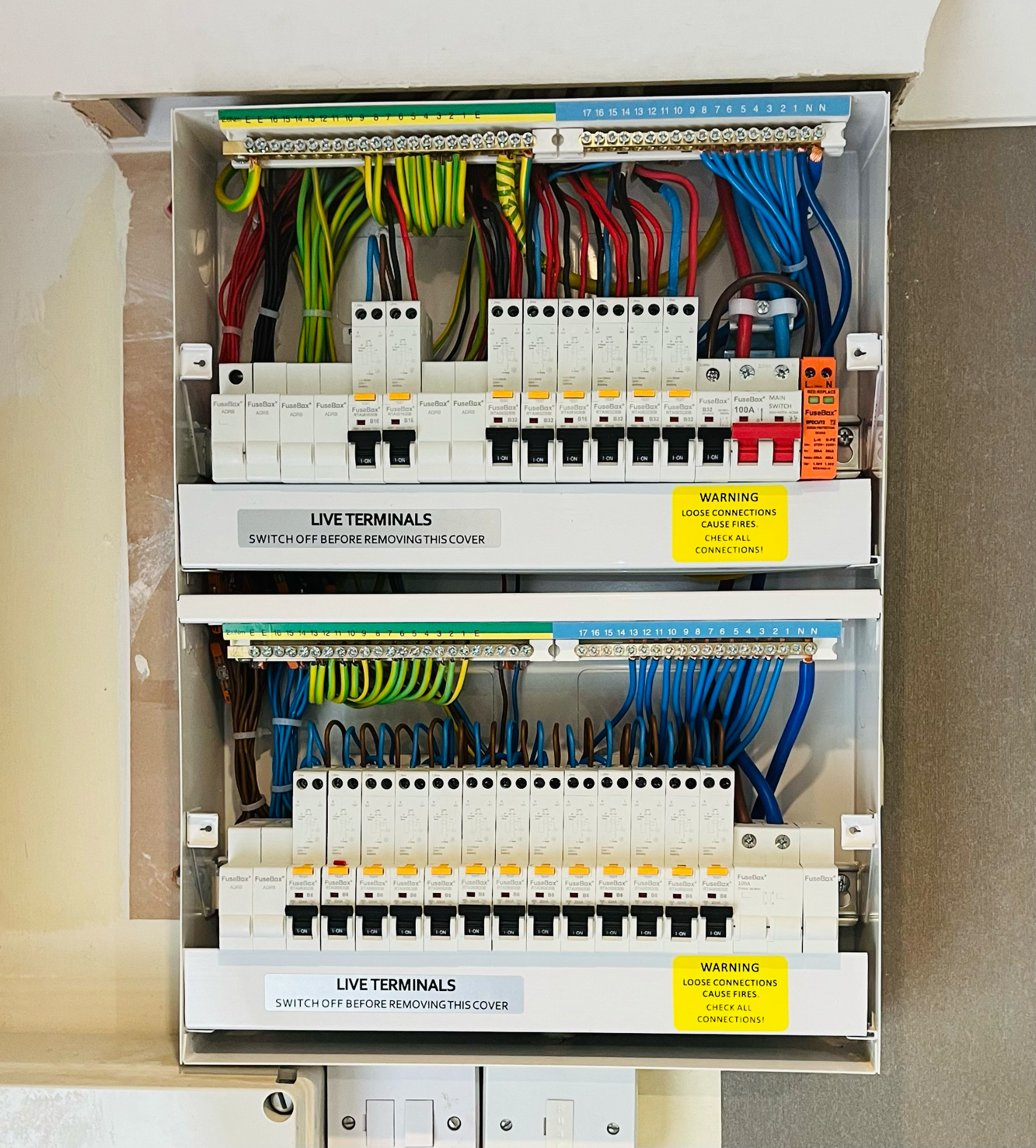
This installation shows a two-row FuseBox consumer unit with individual RCBOs, surge protection and spare ways.

Our recommended approach is to give each circuit its own RCBO. These devices combine overload and short-circuit protection with residual-current protection.

On a board where several circuits share one RCD, a fault can disconnect that whole group. Individual RCBOs help limit disruption to the affected circuit and make it easier to identify where investigation is needed.

Surge protection serves a different purpose, helping protect connected equipment against transient overvoltages.
about-image
about-image

Example two

Hager three-phase distribution board

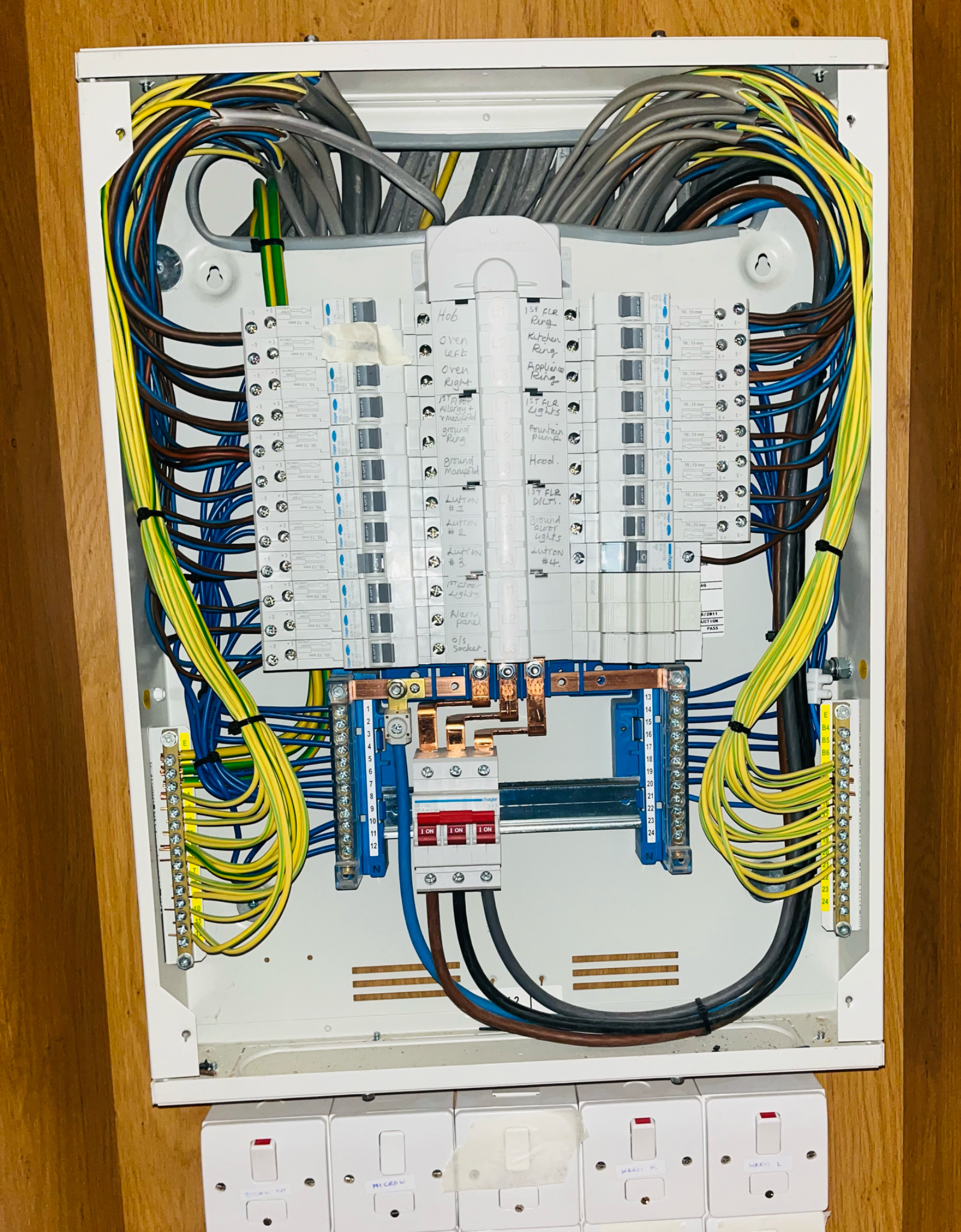
The Hager installation illustrates a three-phase arrangement, which differs from the single-phase supply found in many homes.

The replacement needs to suit the supply, the circuits being served and the available installation space. Clear circuit identification helps with future maintenance and fault finding.

We measure the location before selecting a board. Modern replacement equipment can require more space than the existing arrangement, so enclosure dimensions can influence the brand and layout we recommend.

Where practical, we aim to leave approximately 20% spare capacity for future circuits. This is our design preference, giving homeowners room for later additions.

Consumer unit in an IP-rated enclosure for EV charging

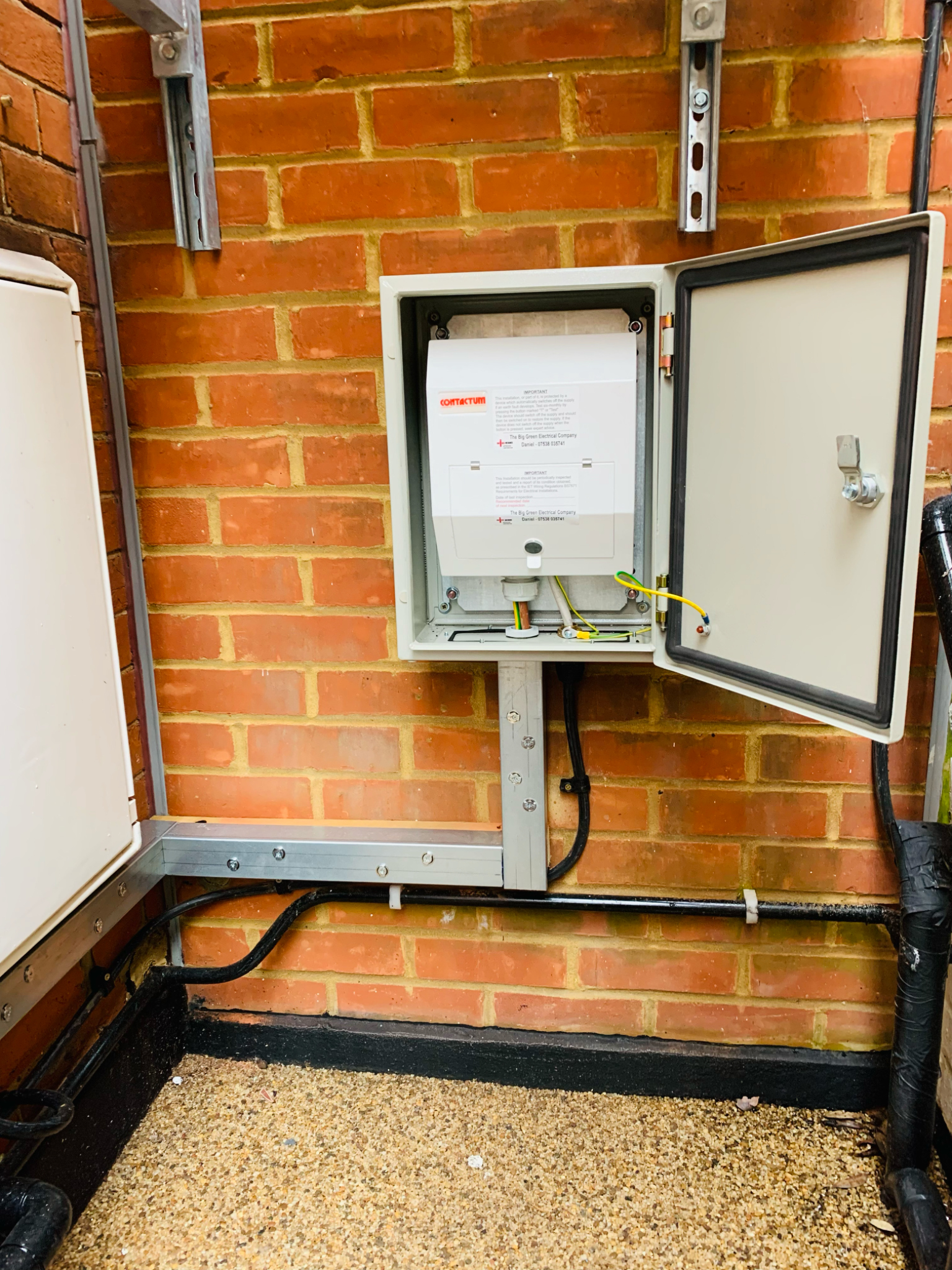
This installation uses a dedicated consumer unit housed inside an IP-rated enclosure to supply an EV charger. The outer enclosure provides additional protection appropriate to its location, while metal cable containment protects and routes the cabling. An earth bonding lead connects the metal door to the enclosure’s protective earthing arrangement.

Design considerations include maintaining the enclosure’s declared IP rating at cable entries, allowing for moisture and temperature, and following the equipment manufacturers’ instructions. EV charging also requires assessment of circuit protection and the earthing arrangement under Section 722 of BS 7671.

Consumer unit inside an IP-rated enclosure supplying an EV charger
Consumer unit installed inside an IP-rated enclosure to supply an EV charger.

An upgrade planned around the property

Replacing a consumer unit involves assessing the existing installation, choosing suitable equipment, reconnecting and identifying circuits, and carrying out inspection and testing.

Our aim is a practical installation with appropriate circuit protection, clear identification and room for future needs.

Considering a consumer unit upgrade? Contact Big Green Electrical to arrange an assessment and discuss the options for your home.

choose-use-image

Ready to Discuss Your Project?

Get in touch with Big Green Electrical today!

Contact us